
The Ultimate Cold Email Follow Up Sequence That Books More Meetings
Learn how to build a high converting cold email follow up sequence that increases reply rates, books more meetings, and improves B2B outreach performance.
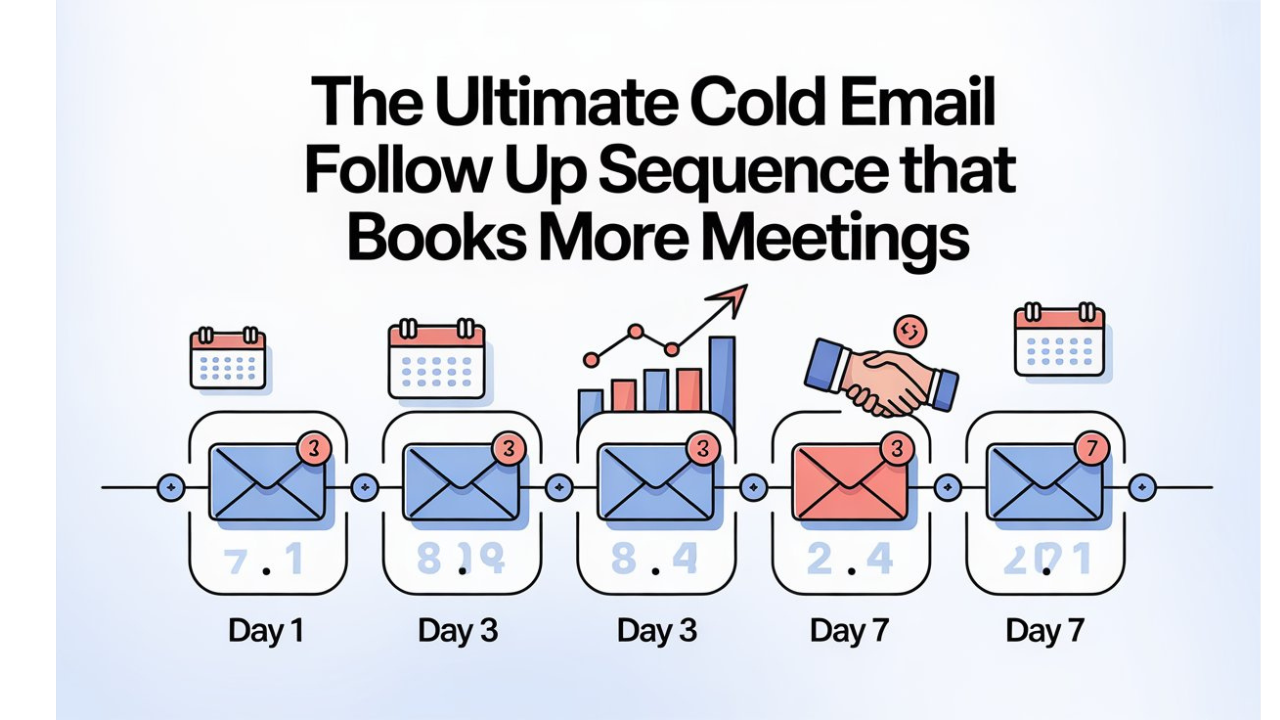
Most cold email campaigns fail too early.
Not because the offer is bad.
Not because the targeting is wrong.
But because people stop after one email.
Data across B2B outbound shows that the majority of replies come from follow ups, not the first email.
In this guide, you will learn how to structure a cold email follow up sequence that increases reply rates without damaging deliverability.
Why Follow Ups Matter in B2B Cold Email
Decision makers are busy.
They:
- Miss emails
- Forget to reply
- Intend to respond later
- Need multiple touchpoints before engaging
A structured follow up sequence keeps you visible without being annoying.
The goal is persistence with relevance.
How Many Follow Ups Should You Send
For B2B outbound, the ideal range is:
- 4 to 6 total touchpoints
- Over 14 to 21 days
Sending only one email drastically reduces your chances of getting a reply.
However, blasting daily follow ups hurts deliverability and brand perception.
Balance matters.
The Ideal Cold Email Follow Up Sequence Structure
Below is a proven 5 step sequence.
Email 1: Initial Outreach
Goal: Introduce problem and value.
Keep it short and personalized.
Do not oversell.
End with a low friction call to action.
Example CTA:
Would it make sense to explore?
Email 2: Light Reminder (3 to 4 Days Later)
Goal: Bring the email back to the top of their inbox.
Keep it very short.
Example:
Hi Sarah,
Just wanted to circle back in case this slipped through.
Worth a quick conversation?
Short follow ups often perform well because they respect time.
Email 3: Add Value (4 to 5 Days Later)
Goal: Introduce new context.
Instead of repeating yourself, add something helpful.
Examples:
- A short case study
- A specific result
- An industry insight
- A common mistake you see
Example:
We recently helped a SaaS team reduce bounce rates by 28 percent by cleaning their lead lists before launch.
Would this be relevant for your outbound?
Now the conversation evolves.
Email 4: Objection Handling
Goal: Reduce friction.
Address silent objections:
- Budget
- Timing
- Relevance
Example:
If now is not the right time, no worries.
Is this something your team plans to improve later this quarter?
This removes pressure and invites clarity.
Email 5: Breakup Email
Goal: Close the loop.
This often generates surprising replies.
Example:
I have not heard back, so I will pause outreach for now.
If improving outbound performance becomes a priority, feel free to reach out.
Should I close the file?
Polite. Professional. Direct.
Breakup emails frequently trigger responses from prospects who were interested but busy.
Timing Strategy for Follow Ups
Spacing matters.
Recommended timing:
Day 1: Initial email
Day 4: Reminder
Day 8: Add value
Day 13: Objection handling
Day 18: Breakup email
Avoid sending follow ups too aggressively.
Inbox providers analyze sending patterns and engagement behavior.
Common Follow Up Mistakes
Avoid these:
- Sending the same message repeatedly
- Adding unnecessary links
- Over explaining your offer
- Writing long paragraphs
- Sounding frustrated
Each follow up should either:
- Add value
- Reduce friction
- Or simplify the decision
Never just “checking in” five times.
Personalization in Follow Ups
Personalization should not stop after email one.
You can:
- Reference company updates
- Mention industry trends
- Comment on recent hiring
- Adjust messaging based on segment
Even light personalization in follow ups improves reply rates.
Metrics to Track in Follow Up Sequences
Monitor:
- Reply rate per step
- Bounce rate
- Positive reply rate
- Unsubscribe rate
Often, Email 3 or Email 5 generates the most positive responses.
If you stop early, you lose those opportunities.
Example Full Follow Up Sequence
Email 1: Introduce solution
Email 2: Light reminder
Email 3: Case study or insight
Email 4: Clarify timing
Email 5: Close the loop
This structure balances persistence with professionalism.
Final Thoughts
Cold email success is rarely about the first message.
It is about disciplined follow up.
Most competitors quit after one or two emails.
Teams that run structured follow up sequences win more replies and book more meetings.
Consistency, relevance, and timing are what separate average outbound from predictable pipeline growth.